Samsung AI Insights Platform
B2B · AI Research · Content · interaction
Samsung is a global technology leader advancing AI and digital innovation across diverse products and services.
This project designed an internal insight platform for the Samsung UX Research Group, enabling intuitive exploration of global AI research interviews.

UX Strategy
Core Problem

Complex AI Research Was Difficult to Navigate
The project began with 21 in-depth interviews featuring AI experts from around the world, each lasting approximately 30 minutes. Rather than presenting full interview transcripts, the team aimed to transform the research into an interactive experience by organizing key insights into a more accessible structure.
However, as we analyzed the interviews with the research team, we found that each expert's background and perspective varied too significantly to fit into simple categories such as "for" or "against" AI. Oversimplifying the content risked misrepresenting the intent and nuance of each interview. The challenge was to organize complex research into an intuitive browsing experience while preserving the integrity of every interviewee's perspective.
UX Strategy
Design Direction

Accessible Content Discovery
Use intuitive visual cues and navigation to encourage users to explore content with minimal effort.
Connected Exploration
Create seamless pathways between related interviews and topics to encourage continuous exploration.
Immersive Storytelling
Present each interview through immersive content experiences that preserve the context, nuance, and perspective behind their insights.
contents DESIGN
Discovery Page

Interest-Driven Discovery
Instead of categorizing interviews into predefined viewpoints, the landing experience starts with four key questions as entry points for content discovery. When users select a question, related interview cards are dynamically revealed based on the chosen topic. Scattered images and interview quotes are presented to encourage users to intuitively explore the content.
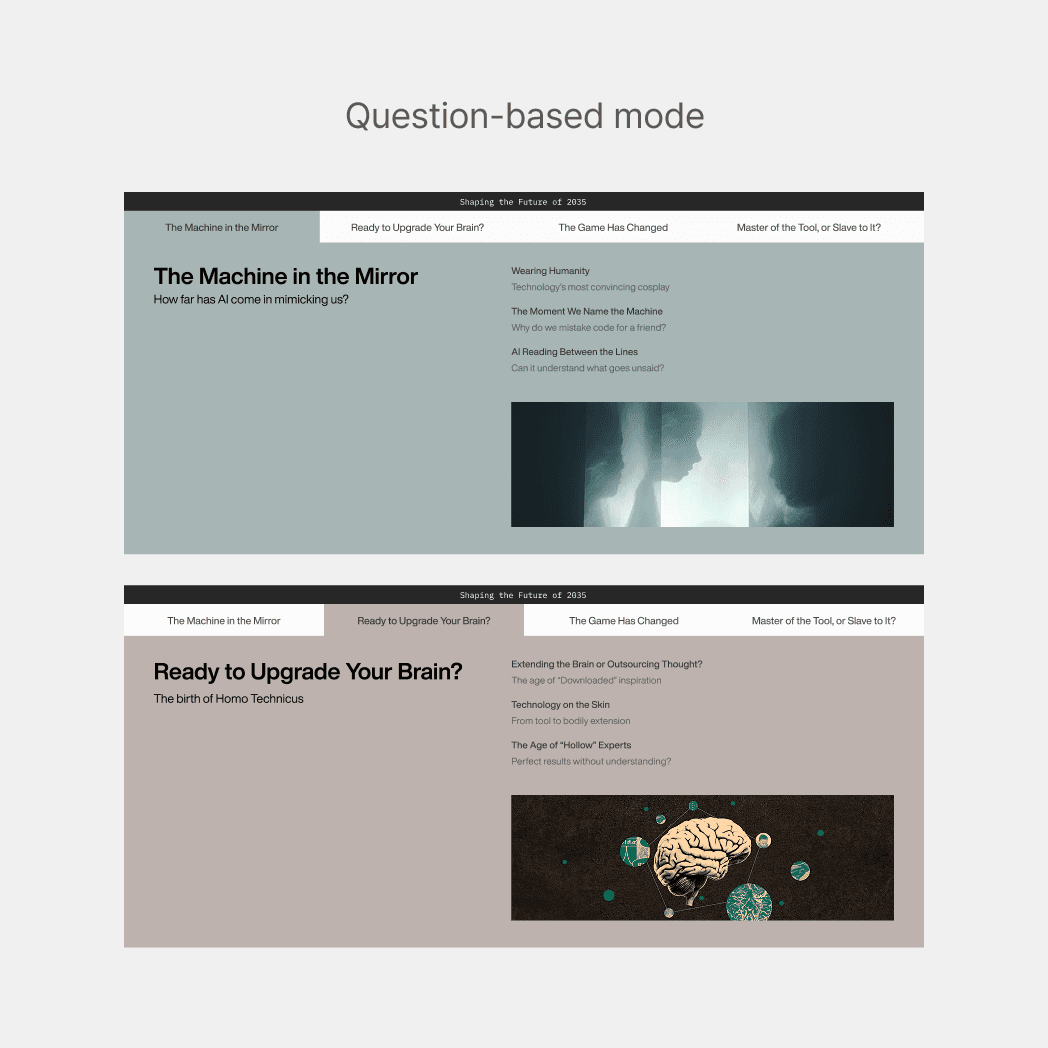

Flexible Topic Navigation
Users can also switch to a topic-based navigation mode to explore interviews through broader AI-related themes. Each topic highlights key perspectives and connects users to relevant interviews, providing a more structured way to browse the research.
Content Design
Interview Content
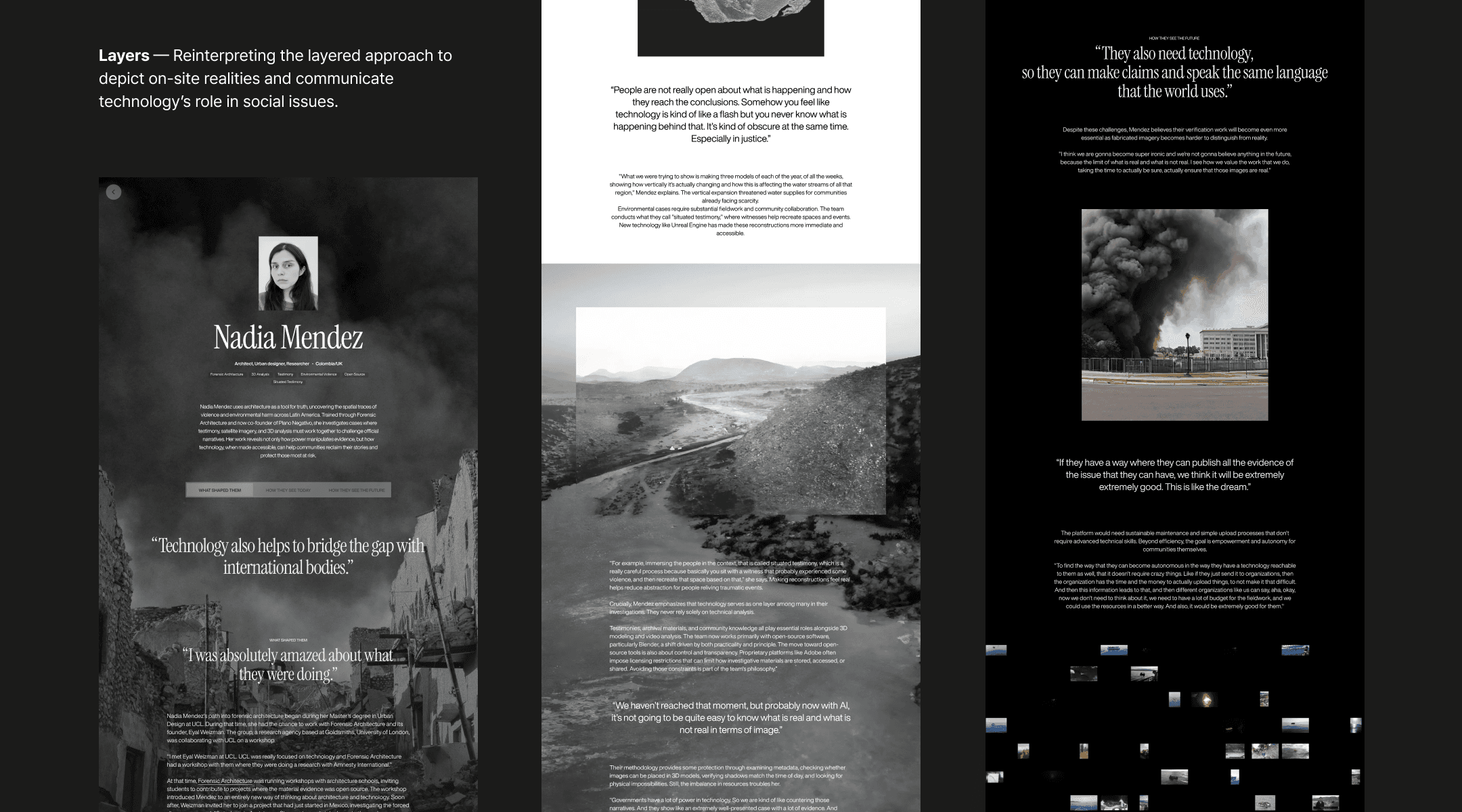


Interview-Specific Content Experience
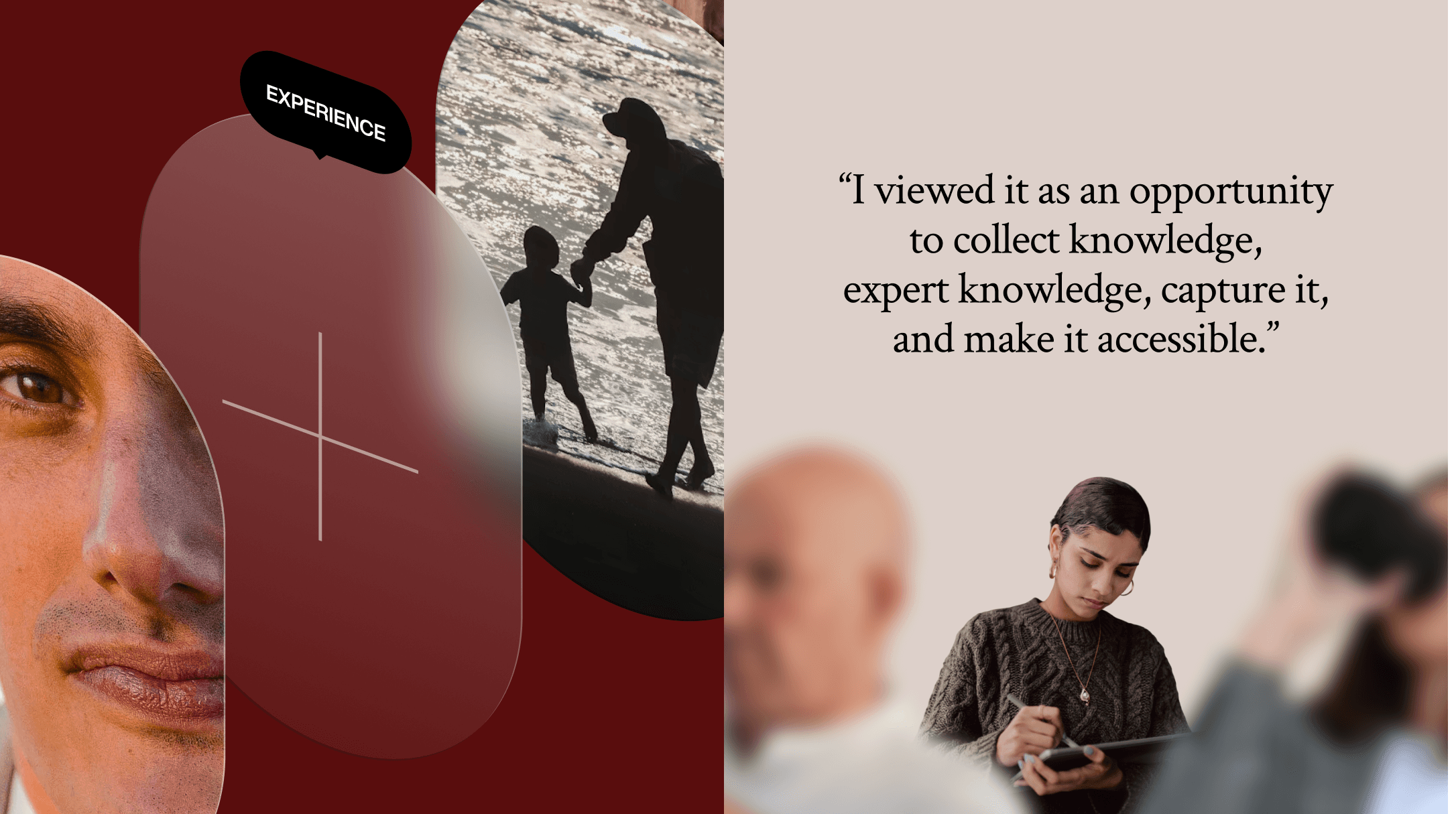
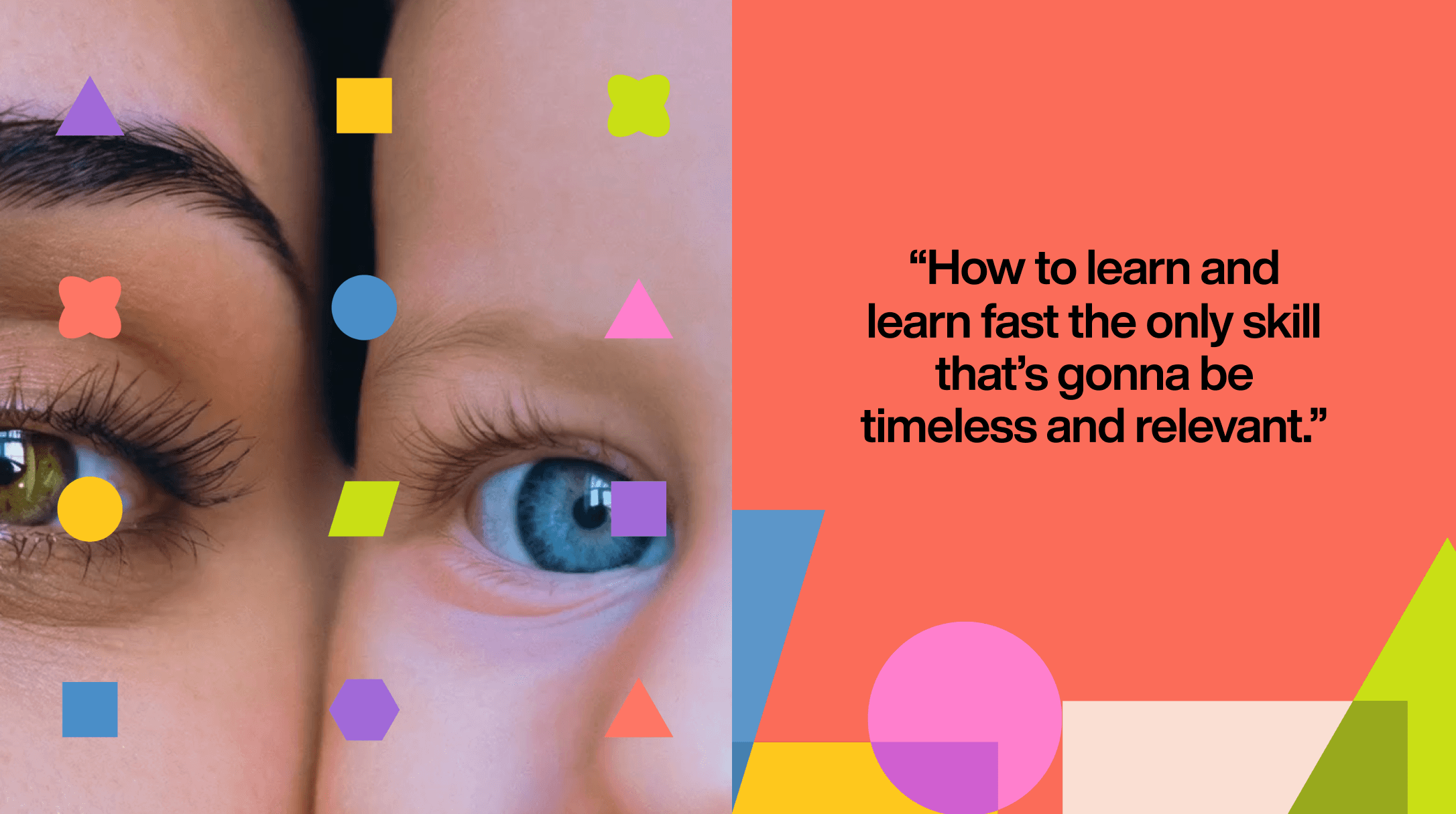
Each interview was designed as a unique content experience, with distinct visual elements that reflect each expert’s personality and perspective rather than following a standardized format.
Interactive Content Engagement
Interactive elements such as charts, tests, and motion-based experiences were integrated throughout the detail pages, helping users better understand each expert’s perspective through direct interaction.

OUTcome